
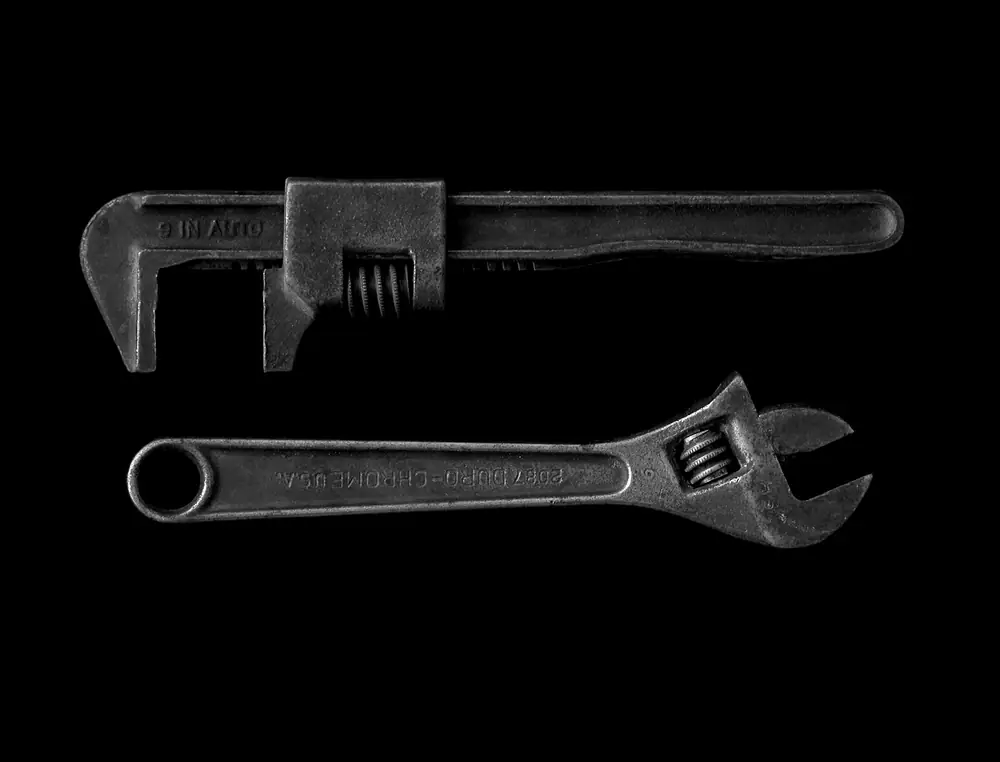
A well-kept tool is easier and safer to use. Rust makes adjustable jaws stick, a tired battery stops halfway through a job, and a dull blade needs force that leads to slips. The good news is that tool care is mostly a handful of small habits rather than a workshop project.
Rust: prevention first
Rust needs bare steel, moisture and oxygen. Remove any one of the three and it stops. In practice, that means:
- Wipe tools after use, especially after handling damp timber, concrete or anything outdoors.
- Apply a thin film of light machine oil or paste wax to bare steel surfaces a few times a year.
- Control humidity. A garage or cellar that feels damp will rust tools quickly. Silica gel packs in toolboxes, or a dehumidifier in the room, help noticeably.
- Do not store tools on concrete floors, which wick moisture.
Removing light rust
- Wipe off dirt and grease with a rag and a little white spirit.
- Scrub surface rust with a fine abrasive pad or fine wire wool and a few drops of oil.
- For stubborn areas, use a brass or steel wire brush, working with the grain of any machined surface.
- Wipe clean, then apply a light coat of oil or wax to protect the bare steel.
- Work moving parts, such as a spanner worm gear or plier pivot, until they move freely.
For heavy rust, a soak in a commercial rust remover or white vinegar will loosen it, but check that the product is suitable for the tool and rinse and dry thoroughly afterwards, then oil. Wear gloves and eye protection throughout.
Lithium-ion batteries
| Habit | Why it helps |
|---|---|
| Store indoors at room temperature | Heat and cold both shorten battery life. |
| Let a hot battery cool before charging | Charging a hot pack adds stress; many chargers pause until it cools. |
| Avoid storing fully drained | Deeply discharged packs may not recover. |
| Rotate between packs | Spreads wear evenly across batteries. |
| Keep terminals clean and covered | Prevents shorts from loose screws or bits in a bag. |
| Retire swollen or damaged packs | Take them to a battery recycling drop-off; never puncture them. |
Always follow the manufacturer's instructions for your specific tool and charger; they know their cells and electronics better than any general rule.
Blades, bits and edges
Utility knives: change blades often. Snap-off blades are designed to be snapped as soon as the tip dulls. A fresh blade cuts with less force, which is safer.
Drill bits: a dull twist bit squeals, smokes and needs heavy pressure. Keep bits clean of resin and sharpen or replace them when they stop cutting cleanly. Using the right speed (slower for larger bits and metal) keeps them sharp longer.
Saws: most modern hand saws have hardened teeth that are not intended to be resharpened; replace them when they no longer track straight. Wipe the blade with a little wax so it glides and resists rust.
Screwdriver and driver bits: worn tips cause cam-out, which damages screws and can slip into your hand. Driver bits are consumables; replace them without guilt.
Corded tools and extension leads
Check cords for cuts, crushed sections and damaged plugs before each use. Coil cords loosely in large loops rather than wrapping them tightly around the tool, which strains the entry point. Retire any lead with exposed wires or a damaged plug or earth pin.
Seasonal maintenance checklist
- Wipe down all steel tools and apply a light coat of oil or wax
- Check for and treat any surface rust
- Test each battery; retire any that are swollen or no longer hold a charge
- Replace dull knife blades and worn driver bits
- Inspect cords and plugs
- Tighten hammer heads, handle screws and loose fittings
- Restock silica gel packs in toolboxes